

Bear markets sort the disciplined from the reactive. History suggests the former group tends to emerge in a considerably stronger position.
Every previous Bitcoin bear market ended. The 2015 bottom at $152 gave way to a gain of over 12,000% by late 2017. The 2018 trough at $3,200 preceded a 345% recovery. The 2022 low at $15,500 preceded a 716% advance to the October 2025 all-time high of approximately $126,000, per trade data compiled by TradeThatSwing. None of that was guaranteed in advance. But each time, investors positioned before the recovery — not after it became obvious — captured the most meaningful gains.
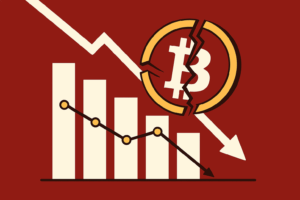
That pattern is worth holding in mind as Bitcoin trades roughly 40% below its October 2025 peak.
The Buffett Principle Applies to Digital Assets Too
Warren Buffett wrote in his October 2008 New York Times op-ed — published at the depths of the global financial crisis — that the right posture is to “be fearful when others are greedy, and greedy when others are fearful.” He was describing equities. The logic is not asset-class specific.
His second observation is equally plain: “Whether we’re talking about socks or stocks, I like buying quality merchandise when it is marked down.” Bear markets are, mechanically, markdown events. Prices fall. Sentiment deteriorates. Retail participants exit. For the investor who has done the due diligence, identified quality assets, and structured a disciplined entry framework, that sequence represents opportunity rather than threat.
What a Crypto Bear Market Actually Does
Beyond price, a bear market performs a structural function. It removes leverage. Projects that survived only because capital was available lose their funding. Teams that built substance tend to continue; teams that built narratives tend to disperse. By the time a market recovers, the asset landscape is typically narrower and more signal-rich than at the peak.
Glassnode’s on-chain data from early 2026 noted that as Bitcoin entered the year following its drawdown, reduced profit-taking pressure and early structural stabilization were visible beneath the headline bearishness — the kind of pattern that long-term holders, rather than short-term traders, are structured to use.
How Disciplined Investors Think About This Differently
The behavioural gap between experienced and reactive investors is most visible in bear markets. A few patterns hold across cycles.
- They separate price from value. A lower price on a fundamentally unchanged asset means the same asset is available at better terms — not that the asset has become less valid. This is the traditional equity investor’s toolkit applied to digital assets.
- They plan entries in advance. Structured allocators define accumulation targets before drawdowns, not during them. Reactive decision-making under volatility tends to produce worse outcomes than pre-committed frameworks — a dynamic compounded in crypto by 24/7 markets and social sentiment loops.
- They maintain dry powder. The investors who benefit from bear markets hold cash reserves for that purpose — liquidity maintained specifically to act when assets are marked down, rather than arriving fully deployed and unable to respond.
- They think in cycles, not quarters. Bear markets compress prices; they do not eliminate the cycle. The relevant horizon is 12–24 months, not the next earnings report.
What to Watch, Not What to Do
None of this constitutes a recommendation to buy, sell, or hold any asset. Markets could decline further. Historical patterns do not guarantee future outcomes.
What experienced investors monitor: exchange outflows (coins moving into long-term custody suggest reduced selling intent), mid-tier holder accumulation, and broader market structure indicators. CoinDesk reported in late April 2026 that Bitcoin’s Bull Score Index moved out of bear territory for the first time since the October 2025 peak — though analysts cautioned that one signal does not confirm a regime change.
These inputs inform a structured process. They do not tell you what the market will do; they tell you how to maintain optionality when conditions shift.
The bear market does not guarantee an outcome. It may, historically, widen the gap between investors who maintained discipline and those who did not — which is precisely the argument Buffett was making in 2008, and the one cycle-aware allocators make today.
This content has been prepared solely for informational purposes and does not constitute an offer to sell or a solicitation of an offer to buy any securities. Any such offer or solicitation will be made only through definitive offering documents and in accordance with applicable securities laws.
The information presented has been obtained from sources believed to be reliable, but no representation or warranty is made as to its accuracy or completeness. Certain statements may constitute forward-looking statements based on current expectations and assumptions, which are subject to risks and uncertainties. No assurance can be given that any projections will be realized.
Past performance is not indicative of future results. Any investment involves risk, including the possible loss of principal. Prospective investors should conduct their own independent investigation and consult with their legal, tax, and financial advisors before making any investment decision.